

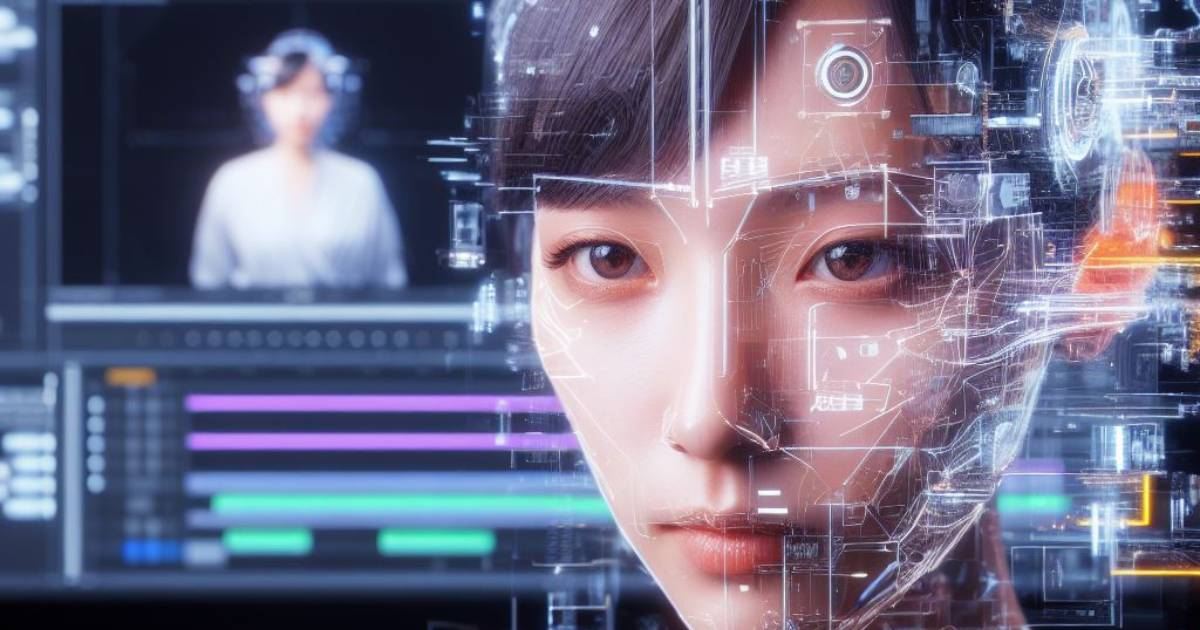
How AI Has Reached Extreme Photorealism and What It Means for the Future of Media
Artificial Intelligence has reached a level of photorealism that, only a few years ago, seemed technically impossible. Today, AI systems can generate faces, environments, lighting conditions, camera movement, and even emotional expressions that are increasingly indistinguishable from real footage. What once required a full production crew, high-end cinema cameras, complex lighting setups, and weeks of post-production can now begin with a carefully structured prompt.
For the media and film industry, this shift is both disruptive and transformative. Traditional production models are being challenged as AI accelerates workflows, reduces turnaround times, and lowers the barrier to entry for content creation. Media houses that were built on large teams and heavy infrastructure are now re-evaluating how they operate in an environment where automation and intelligent systems can handle significant portions of the creative pipeline.
The Future of Film, VFX, and Digital Media
At the same time, AI is not simply replacing production. It is redefining it. Tools powered by machine learning can assist with scriptwriting, storyboarding, pre-visualization, editing, compositing, and even voice generation. Concept development that once required days can now be explored in hours. Campaign variations can be tested rapidly. Visual experimentation has become faster and more accessible.
One of the most significant changes is the democratization of content creation. Individuals with limited formal training in filmmaking are now able to produce visually impressive material through strong prompting skills and creative direction. With a solid understanding of how to communicate ideas to AI systems, creators can generate cinematic scenes, animated sequences, branded visuals, and marketing assets without traditional studio infrastructure. The barrier to entry has dropped dramatically, opening opportunities for entrepreneurs, small businesses, and emerging creators.
However, while AI tools are powerful, they do not replace experience. Photorealism alone does not create compelling storytelling. A strong visual still depends on composition, lighting knowledge, emotional pacing, narrative clarity, and brand alignment. These principles remain rooted in human expertise. Professionals who understand cinematic language are uniquely positioned to leverage AI as a multiplier rather than viewing it as competition.
Opportunities for Businesses and Entrepreneurs
At Black Bird Motion Media, AI is being integrated strategically into modern production workflows through services such as AI Generation and Social Media Web Development. These solutions help businesses accelerate their digital presence while maintaining brand integrity and creative quality. By combining technical knowledge with intelligent automation, companies can produce scalable, consistent content suited for today’s fast-moving platforms. More details about these services can be found at https://blackbirdme.com/service/ai-generation-social-media-web-development/.
Traditional production remains essential, especially for corporate films, branded campaigns, and commercial storytelling that demand precision, coordination, and high production value. As a Video Production Agency in Atlanta, Black Bird Motion Media continues to blend cinematic expertise with advanced technologies to deliver high-quality results while adapting to industry evolution. Information about these services is available at https://blackbirdme.com/service/video-production-agency-atlanta/.
Businesses today are under pressure to produce more content, more frequently, and across multiple platforms. AI offers speed and scalability, but strategy remains the differentiator. Organizations that successfully combine human creativity with AI-driven efficiency are gaining competitive advantage. Rather than eliminating roles, AI is shifting responsibilities from manual execution to creative supervision, direction, and strategic thinking.
There are also ethical considerations that must be acknowledged. With photorealism comes the risk of misinformation and manipulated media. As synthetic visuals become harder to distinguish from reality, credibility and transparency will become increasingly valuable. Media professionals have a responsibility to use these tools thoughtfully and maintain trust with audiences.
The future of film, animation, and digital media is not a choice between human creativity and artificial intelligence. It is a collaboration between the two. AI accelerates ideation, experimentation, and delivery, while human insight shapes meaning, emotion, and narrative depth. The most successful creators and companies will be those who understand both worlds and know how to integrate them effectively.
Artificial Intelligence has reached an extreme level of photorealism, and its impact on the industry is undeniable. Yet the core foundation of media remains unchanged. Storytelling, vision, and experience still matter. In this new era, technology enhances creativity, but it does not replace it. The opportunity lies not in resisting change, but in leading it.